

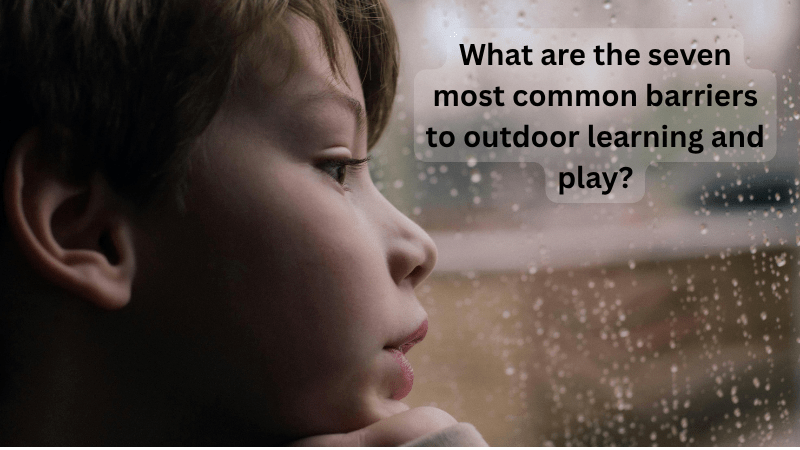
Outdoor Learning, What’s Making it so Hard?
There are very few people working in health, care or education who are not clear about the benefits of spending time outdoors. Most teachers, early years practitioners and support staff understand that outdoor learning and play offer far more than “fresh air” or a chance to “let off steam”. The benefits of green space, blue space, movement, sensory experience and nature connection are now widely discussed in relation to attention, emotional regulation, mental health and wellbeing. Outdoor learning is also firmly embedded in UK education policy and curriculum guidance. So, in many ways, we are already talking the talk. But are we consistently, confidently and universally walking the walk? I am often asked to speak to schools, nurseries and practitioner groups about developing good practice in outdoor learning and play. Again and again, I hear similar questions and concerns: “I don’t feel confident taking my class outside.” “It’s fine when the weather is good, but nobody wants to be out in the rain or cold, do they?” “We don’t have grass and trees in our playground.” “Parents complain when children get dirty.” “It feels too risky to be outside with a big group and not enough adult helpers.” “There is no time in our busy timetable.” These concerns are real. They should not be dismissed or minimised. However, each one can be reframed, explored and managed with the right support, shared understanding and practical planning. The starting point is not usually more information about why outdoor learning matters. Most educators already know this. The deeper issue is confidence. Teachers and practitioners need to know two things: This is worth the effort. I can do this. This week, I am heading to a school for the launch of a professional development programme in the Nature Nurture Approach. I am excited to meet the team and begin exploring how outdoor learning, play and nurture can become part of everyday practice, rather than an occasional treat, special project or something dependent on one enthusiastic member of staff. Here are some of the key challenges we will be thinking about together.
1. Teacher and practitioner confidence
Teacher confidence comes up again and again. Outdoor learning can sometimes be framed as a mysterious “dark art”, something only a few highly skilled or naturally outdoorsy people can do. This can leave many teachers feeling that they are not experienced enough, adventurous enough or knowledgeable enough to take learning outside regularly. Yet outdoor learning does not need to begin with fire lighting, tool use, woodland adventures or complex risk assessments. It can begin with a story under a tree, a maths trail in the playground, a quiet noticing walk, a den made from sheets and pegs, or ten minutes of child-led exploration.
How this can be supported
The most effective support is rarely a one-off inspirational twilight session. Inspiration matters, but confidence grows through practice. Schools and nurseries need opportunities for practical modelling, coaching, reflection and repeated small steps outdoors. Training approaches such as Nature Nurture and Outdoors Thinking support practitioners to try ideas in their own settings, reflect on what happened, notice children’s responses and gradually build confidence over time. Outdoor practice becomes much less intimidating when staff are supported to begin where they are, with the children they know, in the spaces they already have.
2. Curriculum pressure and lack of time
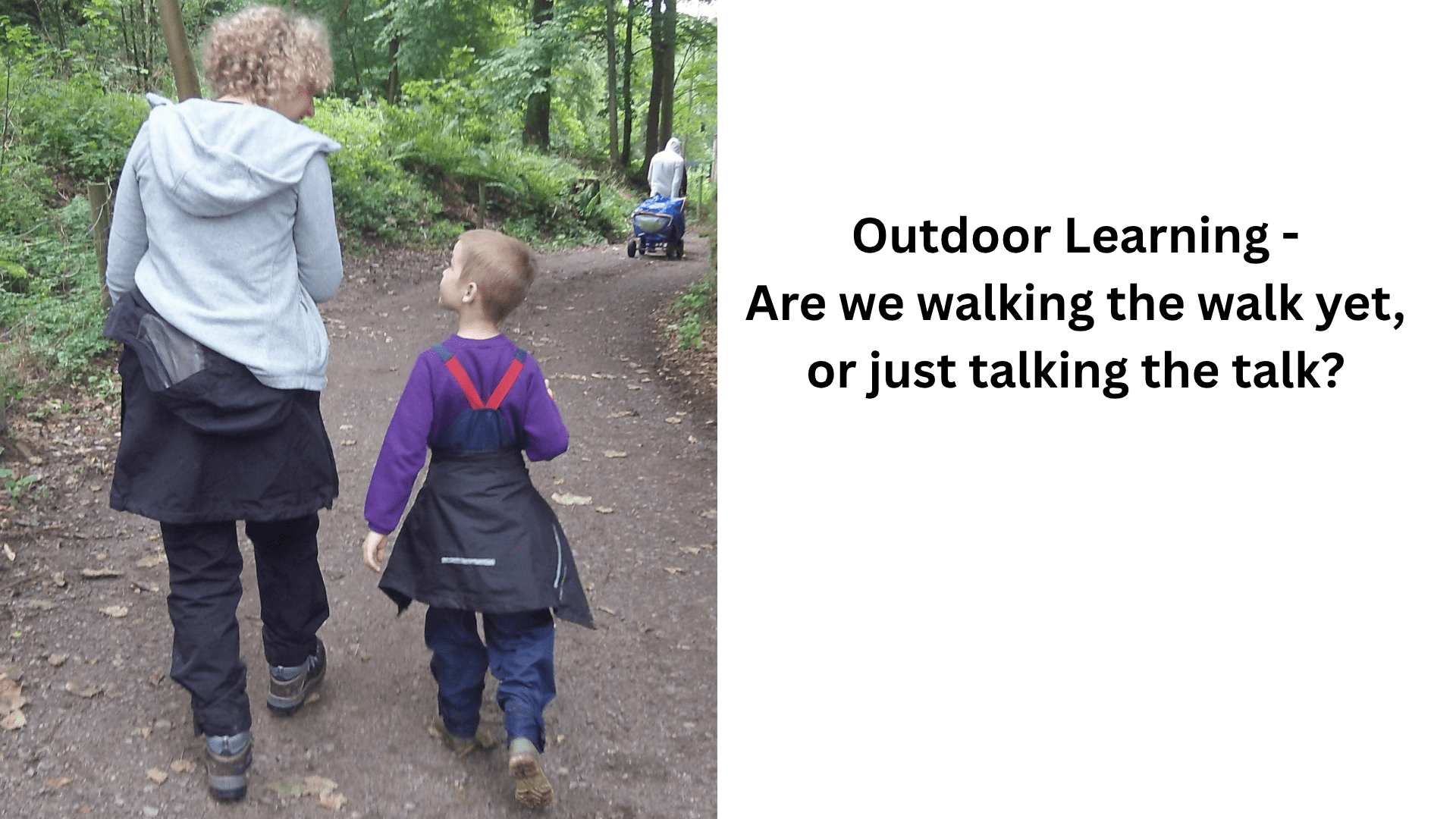
Outdoor learning can easily be squeezed out by packed timetables, assessment demands, staffing pressures and the feeling that outdoor experiences are “nice but not necessary”. For many teachers, the question is not, “Do I believe outdoor learning is valuable?” but, “How can I fit this in when there is already so much to do?” This is especially true when outdoor learning is seen as separate from the curriculum, rather than as a rich and meaningful way of delivering it.
How this can be supported
One of the most helpful shifts is to stop asking, “How do we add outdoor learning?” and start asking, “How could outdoor learning help us teach what we already need to teach?” Outdoor spaces can support literacy, numeracy, science, health and wellbeing, expressive arts, social studies, technologies and interdisciplinary learning. They can also provide the real-life context children often need to make sense of abstract concepts. Learning outside does not need to look like indoor learning moved outdoors. In fact, it often works best when it does not. Outdoor learning can be more open-ended, sensory, physical, playful, collaborative and unpredictable. This is not a weakness. It is often where the richest learning happens.
3. Risk, health and safety anxiety
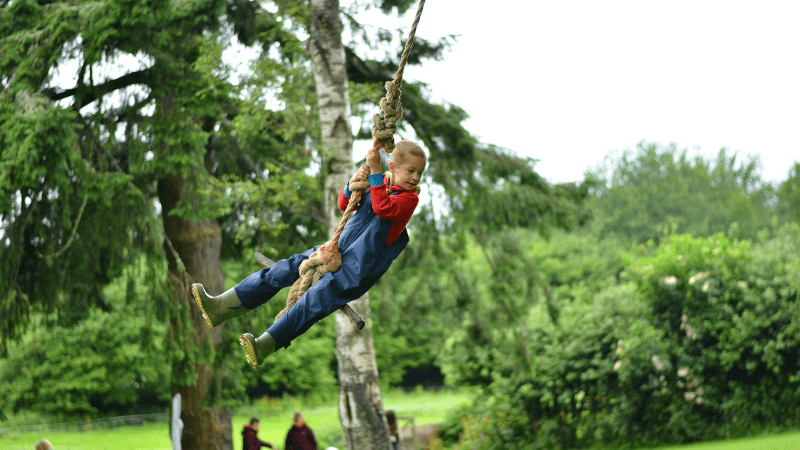
Risk is one of the most common barriers to regular outdoor learning and play. Teachers and practitioners worry about accidents, supervision, permissions, parental complaints and whether they will be blamed if something goes wrong. These worries are understandable. Staff are responsible for children’s safety and wellbeing, and that responsibility can feel heavy. However, risk should not mean avoidance. Children need opportunities to encounter challenge, develop judgement, test their abilities, solve problems and learn how to keep themselves and others safe. The goal is not to remove all risk, but to manage risk proportionately and thoughtfully.
How this can be supported
Risk-benefit thinking is essential. Practitioners need clear policies, agreed routines, leadership backing and shared professional judgement. They also need permission to recognise the developmental benefits of appropriate challenge. In Nature Nurture training, we often find that teachers and practitioners do not need more paperwork. They need clarity, confidence and a shared understanding of what good outdoor practice looks like. When everyone understands the purpose, the routines and the boundaries, outdoor learning begins to feel safer, calmer and more manageable.
4. Weather, clothing and practical logistics
Weather is often named as a barrier, but it usually represents a much wider set of practical concerns. What about wet clothes? Where will muddy boots go? How will children get changed? What if some children do not have waterproofs? Where will we store equipment? How do we manage toilets, snacks, handwashing and transitions? These are not small questions. If they are not thought through, outdoor learning can quickly feel chaotic and stressful.
How this can be supported
Practical routines make a huge difference. Schools and nurseries benefit from clear systems for clothing, storage, wet weather planning, site checks, transitions, handwashing and communication with families. This is also an area where parents and carers need to be brought into the conversation. If families understand the benefits of outdoor play and learning in all seasons, they are more likely to support clothing routines, tolerate mud and understand why children may come home looking like they have had a full and active day. Outdoor learning in Scotland will always involve weather. The aim is not to wait for perfect conditions. The aim is to build realistic, inclusive and manageable routines that allow children to experience the seasons safely and joyfully.
5. Access to suitable outdoor space
Access to outdoor space is not equal. Some schools have beautiful grounds, mature trees, grass, gardens or woodland nearby. Others have tarmac, traffic, limited green space, shared playgrounds or very little access beyond the school gate. This can understandably lead some staff to feel that outdoor learning is not really possible in their setting. But outdoor learning does not only happen in forests, beaches or wild places. These environments are wonderful, but they are not the only starting point.
How this can be supported
The strongest message is: start with what you have. A tarmac playground can still offer movement, weather, shadows, chalk, loose parts, transient art, storytelling, construction, maps, trails, games and sensory exploration. Planters, tyres, logs, crates, tarpaulins, herbs, water trays and recycled materials can begin to soften and enrich even the most urban or concrete spaces. Over time, schools can think creatively about upcycling, planting, partnerships and small changes that invite more nature into the everyday environment. Outdoor learning does not need to wait until the perfect space exists. Often, the space develops because the practice begins.
6. Leadership, whole-school culture and consistency
Outdoor learning is much more likely to become embedded when it is supported by leadership and understood as part of the whole-school or whole-setting culture. If outdoor learning depends entirely on one enthusiastic teacher, it can disappear when that person changes role, moves class or becomes overwhelmed. For outdoor learning to be sustainable, it needs to be shared, valued and planned for. This does not mean every practitioner needs to do the same thing. It does mean there needs to be a shared understanding of why outdoor learning matters and how it connects to the setting’s wider aims.
How this can be supported
Schools and nurseries benefit from strategic support as well as practical training. This may include outdoor learning policies, progression frameworks, whole-school planning, professional learning communities, coaching, self-evaluation and partnership development. The aim is to move from isolated outdoor activities to a culture where outdoor learning and play are seen as part of high-quality practice. This is where Nature Nurture can support schools not only with ideas and activities, but with the deeper work of building confidence, consistency and shared purpose.
7. Equity, inclusion and additional support needs
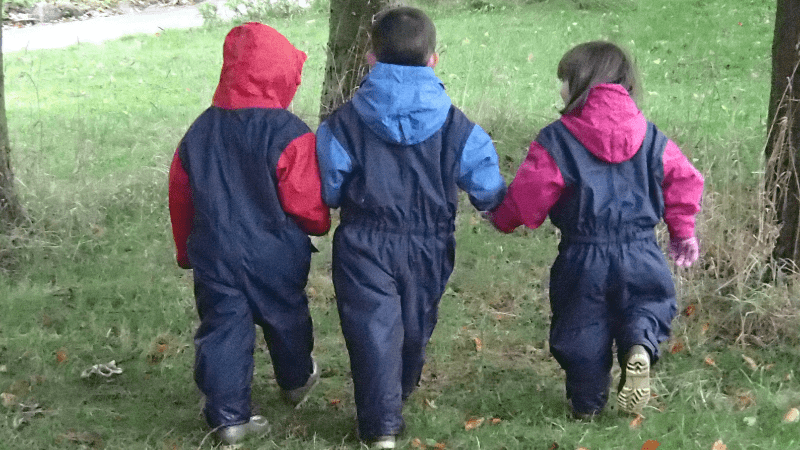
Outdoor learning is often described as naturally inclusive, but it does not automatically become inclusive simply because it happens outside. Children with sensory differences, physical disabilities, anxiety, trauma histories, communication needs, social difficulties or additional support needs may require thoughtful adaptation. For some children, outdoor spaces feel freeing and regulating. For others, they may feel unpredictable, overwhelming or unsafe at first. Inclusion outdoors requires the same careful thinking as inclusion indoors, and sometimes more.
How this can be supported
Inclusive outdoor practice begins with awareness and understanding. From there, practitioners can plan predictable routines, visual supports, sensory adaptations, smaller groupings, accessible routes, quiet spaces, clear boundaries and strong relationships. Families can also offer valuable insight into what helps a child feel safe, regulated and able to participate. This is an area where Nature Nurture has something distinctive to offer. Outdoor learning is not just about being outside. It is about creating emotionally safe, relationally rich and developmentally responsive experiences where children can grow in confidence, connection and resilience. Our professional development programmes, including the Nature Nurture Approach and Nature Nurture in Practice, help practitioners recognise, understand and respond to individual need so that outdoor learning can become genuinely inclusive.
Final thoughts
Teachers and practitioners rarely need to be convinced that outdoor learning is good for children. The real issue is whether they feel confident, supported and permitted to make it a regular part of practice. There is often a gap between knowing the benefits and being able to make outdoor learning happen in ordinary school or nursery life. The key message from Nature Nurture is not simply, “Go outside more.” It is: Start small. Plan well. Manage risk proportionately. Connect outdoor learning to the curriculum. Build predictable routines. Support staff confidence. Listen to children. Involve families. Make outdoor practice part of the culture, not just the enthusiasm of one person. Outdoor learning does not need to be perfect, polished or complicated. It needs to be purposeful, relational and possible. And often, the most important first step is simply helping staff move from: “We know we should” to “We know we can.” If your school or setting would like support with developing outdoor learning, play, nurture and inclusive practice, please do get in touch. We would be very happy to help you take the next steps on this exciting journey.
•••
Further Reading and Resources
If this article has encouraged you to reflect on the benefits and challenges of outdoor learning in your own setting, there are many helpful organisations offering guidance, inspiration and practical support. You may wish to explore resources from Outdoors Thinking, Learning through Landscapes, Play Scotland, Outdoor and Woodland Learning Scotland, The Council for Learning Outside the Classroom, The Forest School Association, Muddy Faces and Education Scotland, all of whom offer valuable perspectives on outdoor learning, play, risk-benefit approaches, school grounds, curriculum links and nature connection.
Take Your Learning Further
For practitioners and schools who would like to take this learning further through a nurturing, inclusive and resilience-focused lens, Nature Nurture offers a range of professional learning pathways. Our Nature Nurture Approach course supports educators and practitioners to embed outdoor play, learning and nurture into everyday practice with groups of children. Nature Nurture in Practice provides a deeper targeted pathway for practitioners supporting children with additional support needs, trauma, anxiety, social and emotional challenges, or barriers to participation.
We also offer consultancy, coaching and practical training for schools and settings who want to build staff confidence, develop a shared outdoor learning culture and make small, sustainable changes that have a meaningful impact for children. You can explore our full range of courses, resources and professional development options through the Nature Nurture website and online shop.