

Supporting Children Through Transitions: Change and Endings in Nature Nurture
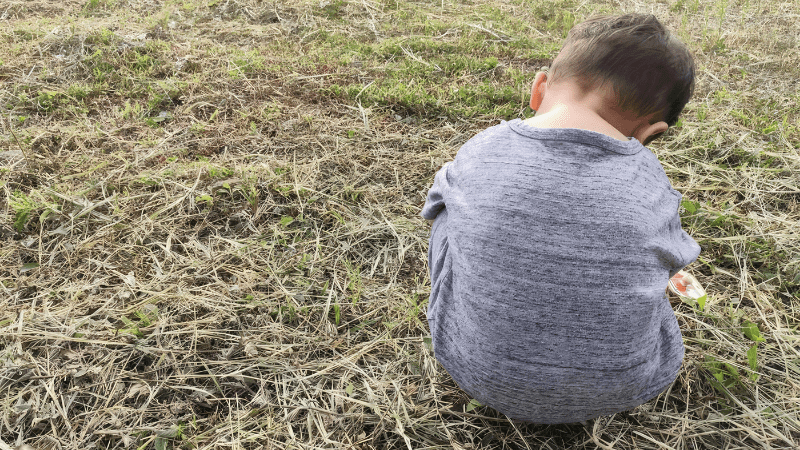
There is no getting away from it. Change is hard. As many schools move towards the final days of the school year, there can be a curious mixture of relief, tiredness, excitement, discomfort and anxiety in the air. For some children and adults, the end of term is welcome. For others, it brings uncertainty, sadness, worry or even a sense of threat. Why is change so hard for so many people? Some of us thrive on novelty and new experiences, but most of us find safety, comfort and belonging in the people, places and routines we know well. When those familiar patterns begin to shift, things can quickly feel unsafe, unsettling or overwhelming. Endings can bring a real sense of loss. In schools, at this time of year, there is often an intense emotional soup. Transitions are particularly difficult for children who have already experienced loss, inconsistency, disconnection or trauma. Children who have learned that relationships can be unreliable may experience endings not simply as a change in timetable, but as something much deeper. They may feel anger, sadness, betrayal or fear, even when the adults around them know that the transition is necessary and carefully planned. I often sit with children who receive Nature Nurture targeted intervention and listen to their fears about sessions coming to an end. Their anger and sadness are understandable. Something that has become safe, predictable and deeply meaningful is changing. Inside, I sometimes wish I could make it different. I wish I could say, “It’s alright, we’ll keep doing this together forever.” But I know that would not be honest, realistic or ultimately helpful. Children need to learn that change can be survived. They need to discover, gradually and with support, that endings can be held with care. They need to experience transitions that are not abrupt, dismissive or confusing, but compassionate, honest and well prepared. Resilience is not built by avoiding every difficult feeling. It is built through supportive relationships, active skill-building and experiences that help children adapt to change over time. The Center on the Developing Child at Harvard University describes supportive relationships as a central foundation of resilience, particularly for children facing hardship. This feels personal to me this year because I am also in a time of transition. I am leaving my role as a teacher of children with complex needs and saying goodbye to a remarkable team of adults who have worked together with such commitment, skill and care for a very wonderful group of children. I am leaving not because I care less, but because I care deeply and want to move into a role where I can continue to support, nurture and advocate for children in different ways. Even when we choose a transition, it can still hurt. For children who have no choice, no say and little influence over what is changing, the pain can be much harder to manage.
Why transitions need compassionate support

Those working with neurodivergent children, children with additional support needs or children affected by trauma already know how important it is to support the many small transitions that happen throughout the day. Moving from one place to another, one adult to another, one activity to another or one expectation to another can be genuinely difficult for some children. The strategies we use are simple, but powerful. We give plenty of warning before change happens. We use visual supports such as now-and-next boards, first-and-then prompts, photographs, symbols or objects of reference. We create routines that stay the same each time. We build bridges between one part of the day and the next through familiar songs, rituals, phrases or transition objects. We keep our language clear and calm. We allow enough time. We avoid rushing children through change when their nervous system is already working hard. These same principles matter just as much in bigger transitions. Moving class, changing teacher, starting a new school, moving home, going away on holiday or finishing a Nature Nurture programme all require preparation, repetition, calm, time, visual support, relational safety and meaningful rituals. The Education Endowment Foundation notes that transitions between classes, year groups and settings are significant for pupils, and that some children need highly bespoke transition support, additional visits and scaffolds for new routines. Education Scotland’s Scottish Early Childhood and Families Transitions Statement also emphasises participation, mutual support, attention to children’s strengths, and the importance of transition practice as part of quality provision. In trauma-informed practice, endings and transitions are not small administrative details. They are relational events. The Alannah and Madeline Foundation describes the importance of marking beginnings and endings with rituals, celebrating relationships and helping children understand what is happening through honest, developmentally appropriate conversations.
How Nature Nurture supports transitions from the beginning
In a Nature Nurture targeted intervention programme, the practitioner’s first task is to help the child feel safe. This does not happen through words alone. It happens through repeated experiences of being met warmly, noticed accurately, accompanied reliably and accepted as they are. Safe relationships, familiar routines and predictable routes to and from the outdoor site all matter. The route itself can become part of the intervention. The child knows where they are going, who they are going with and what will happen next. Over time, this creates a secure base from which the child can begin to explore, play, investigate and take manageable risks. The routines within Nature Nurture sessions provide a gentle scaffolding. They are not rigid scripts. They are holding structures that allow children to feel secure enough to bring themselves into the session. Within this rhythm, there may be time for reconnecting as a group, free play, big movement, quiet reflection, focused creative activity, investigation, exploration, snack, story, fire, tool use, den building or a closing ritual. Children often appreciate the consistent sequence. They know how the session begins. They know what it feels like to arrive. They know how they are invited into play. They know how adults support challenge. They know how the group slows down. They know how the session ends. These patterns help children manage the smaller transitions within each session. Leaving the classroom may be supported by a familiar greeting or a small welcome ritual. The journey to the outdoor space may stay the same until the child feels secure enough to vary it. The practitioner may use a visual timetable, laminated symbols on a lanyard or photographs of the session sequence. Sometimes, a real object is the most meaningful cue. A fire steel might signal, “It’s time to make a campfire.” A magnifying glass might invite, “Shall we look for minibeasts?” A cup might cue snack time. Warnings are given before an activity comes to an end. This might be a verbal countdown, a visual countdown, a song, a gathering call or a familiar phrase. Children are given time to move between one situation and another. The group learns how to slow down and wait until everyone is ready. In this way, preparation, repetition, time, calm, visual support, bridging objects, rituals and routines are not added extras. They are naturally built into Nature Nurture practice.
Ending a Nature Nurture programme
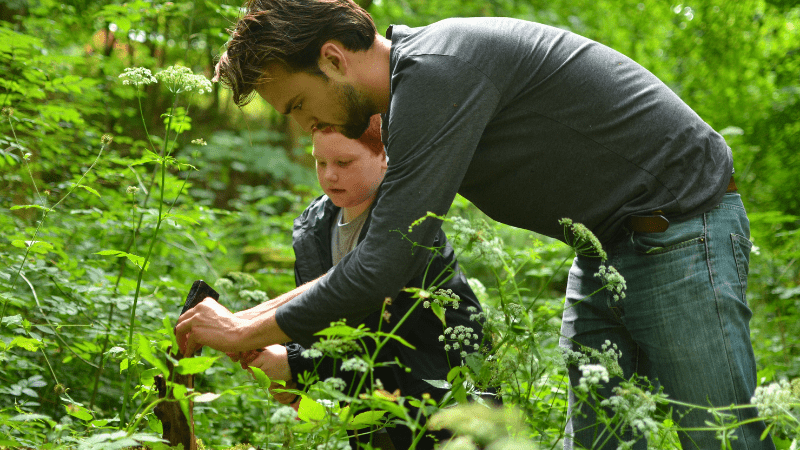
The ending of a Nature Nurture programme needs the same careful attention as the beginning. A programme should not simply stop. Children should not arrive one week expecting the familiar rhythm and then be told, suddenly, that this is the last session. For many children, especially those who have experienced loss or unpredictability, that can feel confusing, painful or rejecting. The two most important aspects of ending well are reflection and preparation. Reflection helps the child look back. Preparation helps the child look forward. Both are needed. Nature Nurture sessions already include reflective practice. Children gradually learn to notice their growth, development and achievements. They begin to recognise what they find challenging and what helps them manage those challenges. They may reflect on moments of courage, kindness, persistence, creativity, physical challenge, social connection or emotional regulation. Preparing to reflect on the whole programme is a natural extension of this existing rhythm. Some practitioners help children create a small book or journal of their Nature Nurture experiences. This might include photographs, drawings, children’s own words, adult-scribed reflections, maps, pressed leaves, recipes, fire circle memories, den designs, favourite places, challenges overcome and moments of pride. These completed Nature Nurture journals can be presented during the final session and are often cherished long after the programme has ended. Children might also record verbal or video reflections using sentence starters such as: “The best part of Nature Nurture for me was…” “The most difficult thing I did was…” “The most awesome thing I saw was…” “The scariest thing I managed was…” “I am most proud of…” “One thing I learned about myself is…” “One thing I want to keep doing is…” The child may choose to share these reflections with family, friends, their teacher or their class. Or they may choose to keep them private. The important thing is that the reflection belongs to the child. It is not simply evidence for adults. It is part of helping the child make meaning from their experience.
Helping children carry the learning forward
Preparation for what comes next can be harder. There may not be anything in the child’s timetable that directly replaces Nature Nurture. That absence needs to be acknowledged honestly. We do not pretend that everything will be the same, because it will not. Instead, we help the child identify the legacy of Nature Nurture in their life. What new interests have they discovered? How might those interests continue? Have they developed a love of birds, bugs, tools, trees, mud, water, storytelling, cooking outside, making dens or noticing the seasons? Could those interests be extended at home, in class, during lunchtime, through a club or with family? What new relationships have formed? Are there friendships within the group that could continue? Could children have opportunities to play together, work together or take on shared responsibilities elsewhere in school? What skills have grown? Has the child become more confident in asking for help, waiting, leading, joining in, managing frustration, taking turns, coping with uncertainty or recovering after things go wrong? How can the adults around the child notice and support these skills beyond the Nature Nurture sessions? In some programmes, practitioners invite children back for a reunion Nature Nurture event. When possible, it is helpful to have this planned before the final session, so the child leaves with a definite date rather than a vague promise. For some children, knowing “we will meet again on this day” can make the ending feel less abrupt. Sometimes parents and carers are invited to the final session. This can be a powerful way to share the child’s achievements and think together about what might continue at home. Could the family take a regular walk in the woods? Could they have a small campfire in the garden for a special occasion? Could they visit the beach, collect natural treasures, build a bird feeder, cook outside, grow something together or simply spend more time in a local green space? Play Scotland’s State of Play in Scotland report highlights that children and young people value play, relationships, outdoor time and access to local spaces that feel safe, welcoming, varied and connected with nature. For children who have developed a deep relationship with the natural world through Nature Nurture, this is not a small thing. It is a resource for wellbeing that can continue to grow.
Saying goodbye with honesty and warmth
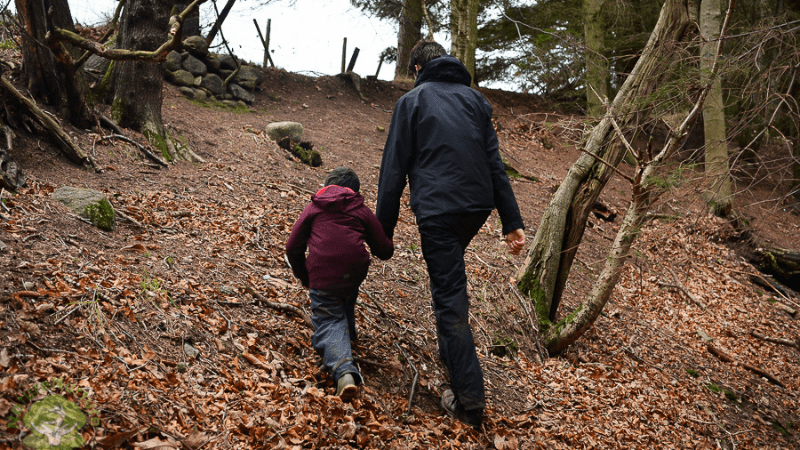
Saying goodbye is hard. For some children, it will be very hard. Some will cry. Some will become angry. Some will say they do not care. Some will withdraw. Some will appear cheerful and then struggle later. Some will need to revisit the ending again and again before it feels real. However the child shows their feelings, we meet them with warmth, steadiness and compassion. We do not shame them for finding endings difficult. We do not minimise their sadness by rushing too quickly to reassurance. We do not say, “Don’t worry, it’s fine,” when it does not feel fine to them. Instead, we can say: “I know this is hard.” “You have really mattered in this group.” “I have loved seeing how much you have grown.” “We are finishing our weekly sessions, and I will still remember you.” “You can feel sad and proud at the same time.” “What you have learned here belongs to you now.” A good ending does not remove the pain of transition. It helps the child feel held within it. It gives them time to look back, a way to understand what is happening, and something meaningful to carry forward. Nature Nurture is not about keeping children dependent on one adult, one place or one programme. It is about helping children experience enough safety, connection, play and success that they can begin to carry those strengths into other parts of their lives. Endings matter because relationships matter. When we end well, we teach children that change can be difficult without being destructive. We show them that good things can be remembered, that feelings can be shared, and that what has been learned in a safe place can travel with them into the next chapter.
•••
Further Reading and Resources
If you would like to explore transitions, endings and relational practice in more depth, there are several helpful places to begin. Education Scotland’s resources on nurture and trauma-informed approaches offer practical support for schools seeking to create emotionally safe, relationship-centred environments, including the Compassionate and Connected Classroom materials. The Scottish Early Childhood and Families Transitions Statement is also useful for thinking about transitions as a shared, relational process involving children, families and practitioners. For a wider UK context, the Education Endowment Foundation’s guidance on supporting pupils through transitions highlights the importance of preparation, additional visits, familiarisation, scaffolding and bespoke support for children who may find change particularly difficult. The Alannah and Madeline Foundation’s resource on trauma-informed transitions is especially helpful in reminding us that endings need honesty, ritual, relational safety and careful emotional holding.
There are also some excellent books and texts that deepen our understanding of why transitions can be so difficult for children. Daniel Siegel and Tina Payne Bryson’s The Whole-Brain Child is a very accessible introduction to children’s developing brains, emotional regulation and the adult role in helping children integrate big feelings and difficult experiences. Bruce Perry and Maia Szalavitz’s The Boy Who Was Raised as a Dog and What Happened to You?, by Bruce Perry and Oprah Winfrey, are powerful texts for understanding the impact of trauma, loss, stress and relational repair. Louise Bomber’s writing on attachment-aware practice, including Inside I’m Hurting, is also particularly relevant for practitioners supporting children who experience separation, endings and changes in relationship as painful or threatening. For those interested in nurture, the Six Principles of Nurture remain a helpful framework, particularly the principle that “transitions are important in children’s lives.”
You can also find further Nature Nurture writing, resources, blog posts and newsletters through the Salugen Training and Consultancy website. Salugen supports evidence-based reflective practice and provides training and CPD for professionals, particularly in education, health and social care. The website includes Nature Nurture resources, reflective tools and blog content exploring nurture, outdoor learning, play, resilience, inclusion and additional support needs.
Take Your Learning Further
For practitioners who want to develop targeted intervention work, the Nature Nurture in Practice course provides a structured professional learning pathway for supporting children with additional support needs through nurture, nature and play. The course structure includes modules on resilience, attachment, positive behaviour, emotional literacy, growth mindset, self-esteem, additional support needs, autism, ADHD, risk-benefit assessment and practical outdoor skills such as shelter building, campfires, tools and ropes. It supports practitioners to plan, deliver, reflect on and evidence Nature Nurture sessions with children who may need more focused relational and developmental support.
For schools, settings and practitioners who want to embed the principles more widely, the Nature Nurture Approach course offers a fully online and flexible professional development programme for early years and primary educators. It is designed to help practitioners bring outdoor-based, nurture-informed, play-led practice into everyday provision. The course includes around 60 hours of self-directed study and is built around an action research cycle of theory, practice, observation, reflection and change. It supports individuals and whole teams to develop confidence, deepen understanding and create more regular opportunities for children to experience the wellbeing benefits of nature, nurture and play.
Ending a programme well is not just an administrative task. It is part of the work itself. When we give children time to reflect, prepare, remember, say goodbye and carry their learning forward, we help them experience transition as something that can be held with care. Nature Nurture cannot remove every difficult feeling, but it can help children discover that change can be faced with support, that meaningful relationships can be remembered, and that the strengths they have built outside can continue to grow in the next part of their journey.