

Nature Nurture and Supporting Children with ADHD
We meet many different learning needs in Nature Nurture, and in all the years I have been doing this work, I have yet to meet a child who has not benefited from time in nature — being nurtured, moving freely, and engaging in child-led play. This includes many children whose needs are often misunderstood or unsupported in conventional learning environments.
In this blog we are focusing on children who are often misunderstood in school and in society more widely. Children who are frequently described as disruptive, distracted, impulsive or “too much.” And yet, time and again, these same children thrive and flourish when we change the conditions around them.
This week in our Nature Nurture in Action course, we are exploring ADHD.
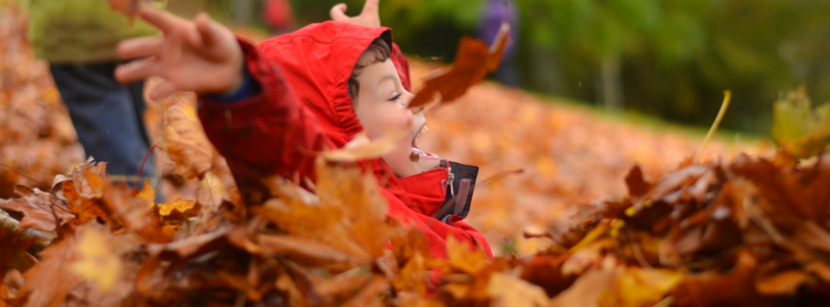
A Shift in Understanding ADHD
When I ask practitioners to describe the children most referred to Nature Nurture programmes, their answers are remarkably consistent:
- Children with ADHD
- Children with autism
- Often both
- “The children who need to get out of class.”
There was a time when one or two children in a class were considered to have additional support needs. Today, teachers describe enormous developmental variability. Many classes include several children with a diagnosis of ADHD — and others who would likely meet criteria if assessed.
The most common descriptions from adults?
- Impulsivity
- Poor self-regulation
- Difficulty sitting still
- Struggling to listen or sustain attention
But when I ask about strengths, I hear something interesting:
- Creative thinking
- Energy and enthusiasm
- Strong sense of humour
- Inventiveness
- Deep hyperfocus on interests
Have you noticed? Many of these strengths are simply a reframing of the characteristics associated with ADHD. And the reframing matters.
The Hidden Effort of ADHD
One aspect of ADHD that is rarely understood well in schools is sensory modulation.
The frontal lobe helps us filter sensory input — to ignore background noise, movement, visual distractions. In many children with ADHD, this filtering is less efficient. That means they are not trying less — they are often working much harder.
It is exhausting.
Hypo-sensitivities in proprioception and vestibular senses mean that children with ADHD need to move, experience deep pressure, force or resistance to feel well in their bodies.
Children with ADHD frequently expend more energy than their peers simply to remain seated and focused in a conventional classroom environment. And yet they are regularly told they are not trying hard enough.
What looks like distraction is often stress.
What looks like hyperactivity is often sensory seeking.
Many children with ADHD experience differences in:
- Interoception (awareness of internal body signals)
- Proprioception (knowing where the body is in space)
- Kinaesthetic sense (movement and force)
If a child feels disconnected from their body, they will seek bigger movement. Rough and tumble play, climbing, spinning, running — these are not defiance. They are regulation attempts.
Why Nature Changes the Equation for ADHD
Research increasingly supports what many practitioners already observe:
- Short periods of nature exposure can improve concentration in children with ADHD.
- Physical movement — especially cognitively engaging activity — supports executive function and attention.
- Positive teacher–pupil relationships are strongly associated with better outcomes for children with ADHD.
Outdoors, all three of these elements come together.
Nature reduces cognitive overload.
Movement becomes expected rather than problematic.
Relationships soften when we stand side-by-side rather than face-to-face.
In Nature Nurture, we practise regulation explicitly:
- We encourage big physical activity that gets everyone out of breath.
- We notice heartbeats, breathing, warmth, muscle tension.
- We rest and check in again.
- We stretch and release tension.
- We name sensory experiences.
We start small — very small — and extend gradually.
We practise filtering sounds.
We practise focusing visually.
We practise returning attention.
But we do it in an environment that supports success rather than punishes difference — crucial for children with ADHD.
“Kids Do Well When They Can”
The philosophy of Ross W. Greene — “Kids do well when they can” — is one we wholeheartedly embrace.
Stuart Shanker reminds us that no child chooses to be dysregulated.
The difficulty is rarely motivation.
It is usually skill.
When we react to behaviour after it has escalated, we are late. Greene calls calming strategies “late responses.” They may help in the moment, but they do not solve the underlying mismatch between expectations and skills — a mismatch particularly common in ADHD.
Nature Nurture encourages us to be early.
To ask:
- What expectation is this child struggling to meet?
- Does the child have the skills required?
- If not, how do we adjust the expectation?
- How do we build the skill collaboratively?
When we problem-solve with a child rather than imposing consequences upon them, we teach regulation, respect and agency.
The Long-Term Impact for Children with ADHD
Reacting to concerning behaviour does not solve the problem. Exclusions, missed playtimes, phone calls home — these often deepen shame without building skills.
This is true for all children.
But for children with ADHD, who may already feel “wrong” in school, it can be particularly damaging.
Being outside in nature, in the presence of attuned adults, engaging in meaningful play, has a powerful cumulative impact:
- Reduced stress
- Increased body awareness
- Strengthened executive functioning
- Improved relational safety
- Greater sense of competence
And perhaps most importantly:
Children begin to experience themselves as capable.
That is where resilience grows — especially for children with ADHD.
Research and Reading
The ideas explored in this article are informed by a growing body of research into ADHD, regulation, relationships and nature exposure. A small selection includes:
- Taylor, A. F., & Kuo, F. E. (2009). Children with attention deficits concentrate better after walk in the park. Journal of Attention Disorders, 12(5), 402–409.
(Found that children with ADHD showed improved concentration after brief exposure to green space compared to built-up environments.)
Direct link (ERIC peer‑reviewed record)
Publisher DOI link - Cerrillo-Urbina, A. J., et al. (2015, with updated meta-analyses 2023). The effects of physical exercise in children with ADHD.
(Meta-analyses consistently show physical activity improves executive functioning and reduces ADHD symptoms.)
Open‑access PDF (ResearchGate-hosted)
Alternative open‑access source (OA.mg) - Systematic review (2024), International Journal of Environmental Research and Public Health.
(Concludes that nature exposure shows promising benefits for attention and wellbeing in children with ADHD, while highlighting the need for further high-quality studies.)
Publisher open‑access link (MDPI)
Full-text PDF (Bond University Repository) - Research on teacher – pupil relationships and ADHD (2023 meta-analysis).
(Demonstrates strong links between relational quality and academic and psychological outcomes.) - Greene, R. W. (2021). The Kids Who Aren’t Okay.
- Shanker, S. (2016). Self-Reg.
Together, this research reinforces what many practitioners observe: when we combine relational safety, movement and access to nature, we create conditions that support regulation and resilience.
Learn More
Explore how relational pedagogy, outdoor learning and strengths‑based approaches can transform your setting:
👉 Nature Nurture Approach & Courses
👉 Training & Consultancy Support