

The diversity of neurodiversity shows us that every brain brings its own strengths, challenges, and ways of experiencing the world. Whenever I talk to professionals about supporting neurodiversity, I’m struck by how difficult it can be to convey both the extraordinary gifts these children bring to the world and the very real challenges they must navigate each day in a society largely designed for neurotypical experiences.
Autism is often spoken about as if it were a single profile, yet anyone who works closely with autistic children knows this could not be further from the truth. Under the umbrella of “autism” sits an extraordinary diversity of ways of communicating, sensing, interacting with others, and experiencing the world.
Thankfully we have moved away from the old language of the “triad of impairments,” which framed autistic difference primarily in terms of deficits. Yet even now, systems still tend to seek tidy categories and common characteristics, while the children themselves continually remind us that each autistic profile is unique.
In the Nature Nurture in Practice programme and the Nature Nurture Approach course, I often feel there is never quite enough time to explore the complexity of autism in all its richness. Practitioners need to consider communication differences, sensory processing, connection styles, focused interests, adaptive thinking, and the importance of predictability and safety.
The most meaningful way I have found to help practitioners understand these ideas is through real stories of children I have worked with across more than forty years in education and outdoor learning.
Each child’s story reminds us that autism is not a single experience, but many.
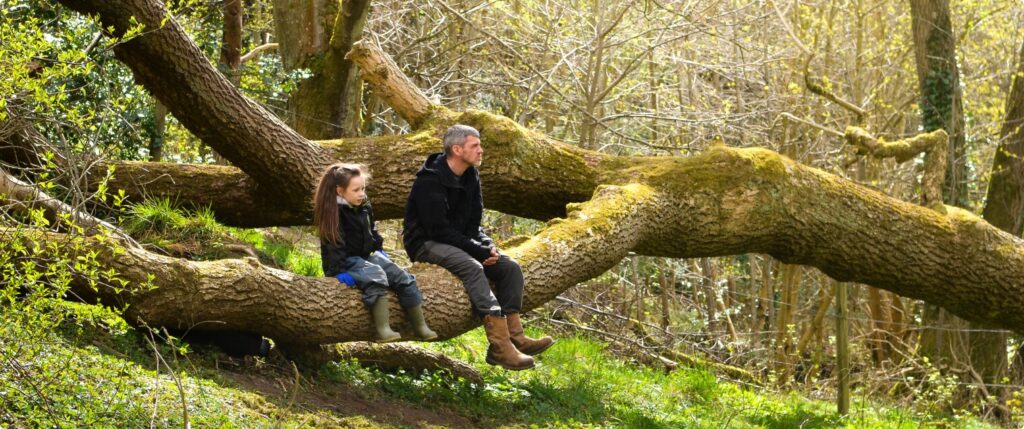
Lea
Lea is a vibrant child who communicates through a rich blend of approximate signs, vocalisations, gestures and pointing. She is autistic and lives with global developmental delay and cerebral palsy.
Recently Lea has been rebuilding her mobility following medical treatment designed to support her muscle tone. The process is painful and demanding, yet she approaches it with remarkable determination and curiosity.
Lea thrives in natural environments, particularly when animals are involved. Outdoor spaces provide her with sensory experiences that support both regulation and engagement. The movement of wind through leaves, the textures of bark and soil, the presence of animals — these experiences draw her attention and invite exploration.
Lea benefits greatly from predictable routines and familiar interests that help her feel secure. She also experiences significant communication and learning challenges, and transitions can be difficult.
Within Nature Nurture sessions, Lea’s strengths guide the approach. Her connection with animals, her sensory curiosity and her emerging communication are central to how activities are planned. Sessions are shaped around her interests, movement needs and preferred ways of expressing herself, enabling her to participate meaningfully and joyfully in outdoor environments.
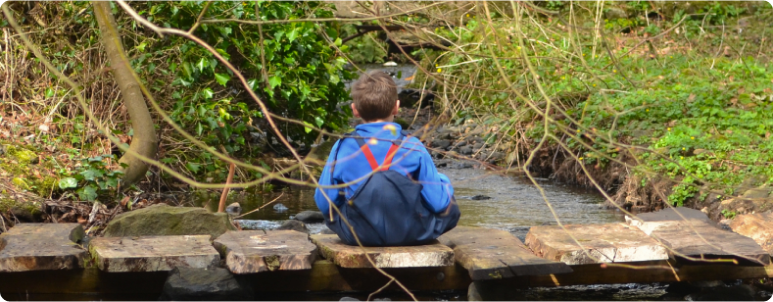
Ellie
Ellie is energetic, curious and determined. She communicates verbally and frequently uses echolalia as part of her expressive language.
She has strong motivation and a clear sense of what she wants to do, but also experiences significant anxiety when routines change or situations feel unpredictable. At these times she can become overwhelmed and distressed.
Ellie has sensory processing differences and finds transitions particularly challenging. She benefits from clear structure, gentle preparation and consistent, attuned support from adults.
Outdoors, Ellie comes into her own. Natural environments reduce the sensory pressures she experiences indoors and offer the space she needs to regulate.
She is particularly fascinated by fire. Its movement, warmth and sensory qualities capture her attention and help her remain calm and focused when supported safely.
Within Nature Nurture sessions, Ellie’s curiosity, determination and love of exploration guide the learning experience. Predictable routines combined with sensory-rich outdoor opportunities allow her confidence and emotional regulation to grow.
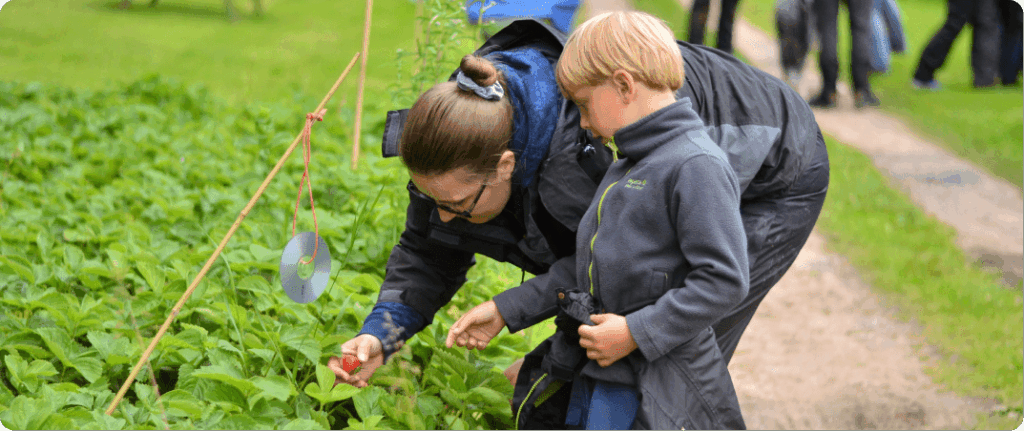
Liam
Liam is bright, articulate and deeply curious about the world around him. He has a rich vocabulary and enjoys conversation, though his language processing can become slower when he feels overwhelmed.
He experiences sensory hypersensitivities that can lead quickly to anxiety. When his sense of order is disrupted or situations feel unpredictable, he may shut down or experience intense meltdowns. These moments reflect distress rather than intent.
Liam recovers best when supported with calm, predictable and attuned responses.
Outdoors is where Liam is most regulated and engaged. Movement, fresh air and open space help him feel grounded and able to explore with confidence.
He particularly values independence and trust. In our setting, he has access to an enclosed garden and wooded area where he can spend time alone while still being safely observed from a distance. This balance between autonomy and safety is vital for him.
Nature Nurture sessions build on Liam’s strengths — his curiosity, thoughtful questioning and love of outdoor activity — while providing the structure and sensory awareness he needs to feel secure.
The common thread
Lea, Ellie and Liam are three children whose neurodiversity manifests very differently.
Yet they share something important: the enabling experience of spending time in natural environments with adults who are attuned to their individual ways of learning and communicating.
There are some common themes across their experiences. Communication differences, anxiety, sensory processing variations and the need for predictability often appear in different ways.
But the expression of those needs looks different in every child.
Outdoor environments remove many of the barriers that exist within traditional classrooms. The benefits are not only physical space but also sensory richness, opportunities for movement, and the slower rhythms of nature.
For many autistic children, regular time outdoors can have a profound effect on wellbeing and emotional regulation. It can support them in developing strategies for navigating a world that often overwhelms their senses and expectations.
Nature Nurture practice does not attempt to “fix” the child.
Instead, it seeks to understand the child and how their neurodiversity influences their interaction with the world.
By observing carefully, following interests, and creating environments that support regulation and connection, practitioners help children build confidence, resilience and a stronger sense of belonging.
A wider challenge for schools
Beyond individual practice, there is also a systemic question.
Too often, education systems continue to assume neurotypical environments, expectations and communication styles as the default. When autistic children struggle within those systems, the focus frequently turns to adapting the child rather than adapting the environment.
Inclusive practice asks us to rethink that approach to neurodiversity.
It requires school communities to develop deeper understanding of neurodiversity and to create environments that support a wider range of sensory, social and communication needs. Understanding the diversity within neurodiversity helps us build more compassionate and responsive relationships with the children we support.
Nature-based learning environments offer powerful opportunities to do this.
My hope is that every school might one day offer regular Nature Nurture experiences for all children — not as a specialist intervention, but as part of a universal approach to supporting wellbeing, connection and learning.
Because when children are given the space to be themselves in environments that meet their needs, remarkable things can happen.
Research and Further Reading
A growing body of research supports the benefits of nature-based experiences for autistic children and those with additional support needs.
Studies show that natural environments can support emotional regulation, reduce stress, and increase engagement in learning for autistic children. Sensory-rich outdoor environments also provide flexible spaces that allow children to move, explore and regulate in ways that are often difficult in indoor classrooms.
Key research and reading include:
• Kuo, Barnes & Jordan (2019) – Do Experiences With Nature Promote Learning?
https://www.frontiersin.org/articles/10.3389/fpsyg.2019.00305
• Tillmann et al. (2018) – The Relationship Between Nature Exposure and Children’s Health
https://www.ncbi.nlm.nih.gov/pmc/articles/PMC6124849/
• Richard Louv (2005) – Last Child in the Woods
• Angela Hanscom (2016) – Balanced and Barefoot
• Jan White (2015) – Playing and Learning Outdoors
• Children & Nature Network research library
https://www.childrenandnature.org/resources/
These and many other studies reinforce what practitioners working outdoors with children have long observed: time in nature supports physical health, emotional wellbeing, social connection and engagement in learning.