

Way back in 2009, I was buzzing to attend my first Scottish Learning Festival. I packed my days with as many presentations, workshops and conversations as possible. At the end of day one, though, a quiet realisation crept in: I had gravitated towards sessions that neatly aligned with my existing values and beliefs.
So, on the final day, I made a deliberate choice to step outside my comfort zone. I signed up for a keynote titled “Developing Growth Mindsets: How Praise Can Harm and How to Use it Well”, delivered by — then unknown to me — a professor from Stanford University: Carol Dweck.
Scottish Learning Festival, 2009 — Full Keynote Video
▶ YouTube link: https://www.youtube.com/watch?v=Bhv0dznmz4A
It was the phrase “how praise can harm” that really got my back up.
In my naïvety, I equated this with a criticism of compassion and affirmation — cornerstones of the relational practice I held dear. I walked into that lecture with my metaphorical arms folded, ready to defend everything I valued.
And then… I listened.
Slowly, uncomfortably, my defensive posture softened. The ideas challenged my practice, unsettled my assumptions, and yet offered a new lens on how children develop self-belief. That discomfort turned out to be profoundly useful. It reshaped how I think about praise, struggle, and learning—and it’s stayed with me ever since.
Growth Mindset in Nature Nurture
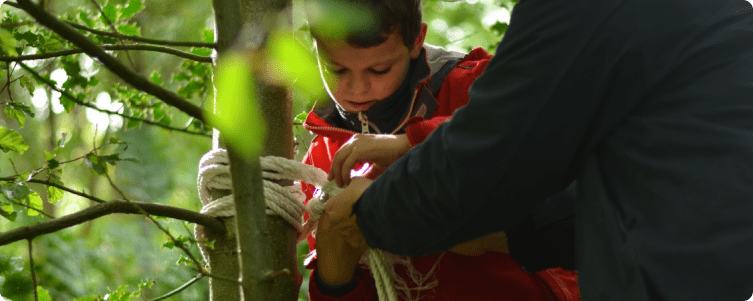
In our current module of the Nature Nurture in Action course, we’ve been exploring children’s emotional development and how nature, nurture and play can act as a powerful, therapeutic intervention. Last week, practitioners reflected on their observations of children’s self-esteem and on their own responses. This week, we turn our attention to Growth Mindset theory — and what it looks like in practice during Nature Nurture sessions.
At its heart, Growth Mindset is the belief that “I can grow and develop through practice and effort”, rather than being locked into a fixed sense of “I can’t do this and never will.” For many of us, this fits naturally with Nature Nurture values. The word “yet” — “I can’t do this yet” — has become something of a quiet mantra in our groups.
But our discussions have also surfaced a familiar pitfall: the rescuer instinct.
Watching a child struggle — especially when that struggle carries a heavy emotional weight—can be deeply uncomfortable. Offering enthusiastic praise like “You’re trying really hard!” when a child feels close to failure can sometimes land badly, even provoke contempt. Yet rushing in to help—to spare them discomfort or disappointment — sends another damaging message: “I don’t believe you can do this without me.”
Neither response supports genuine self-belief.
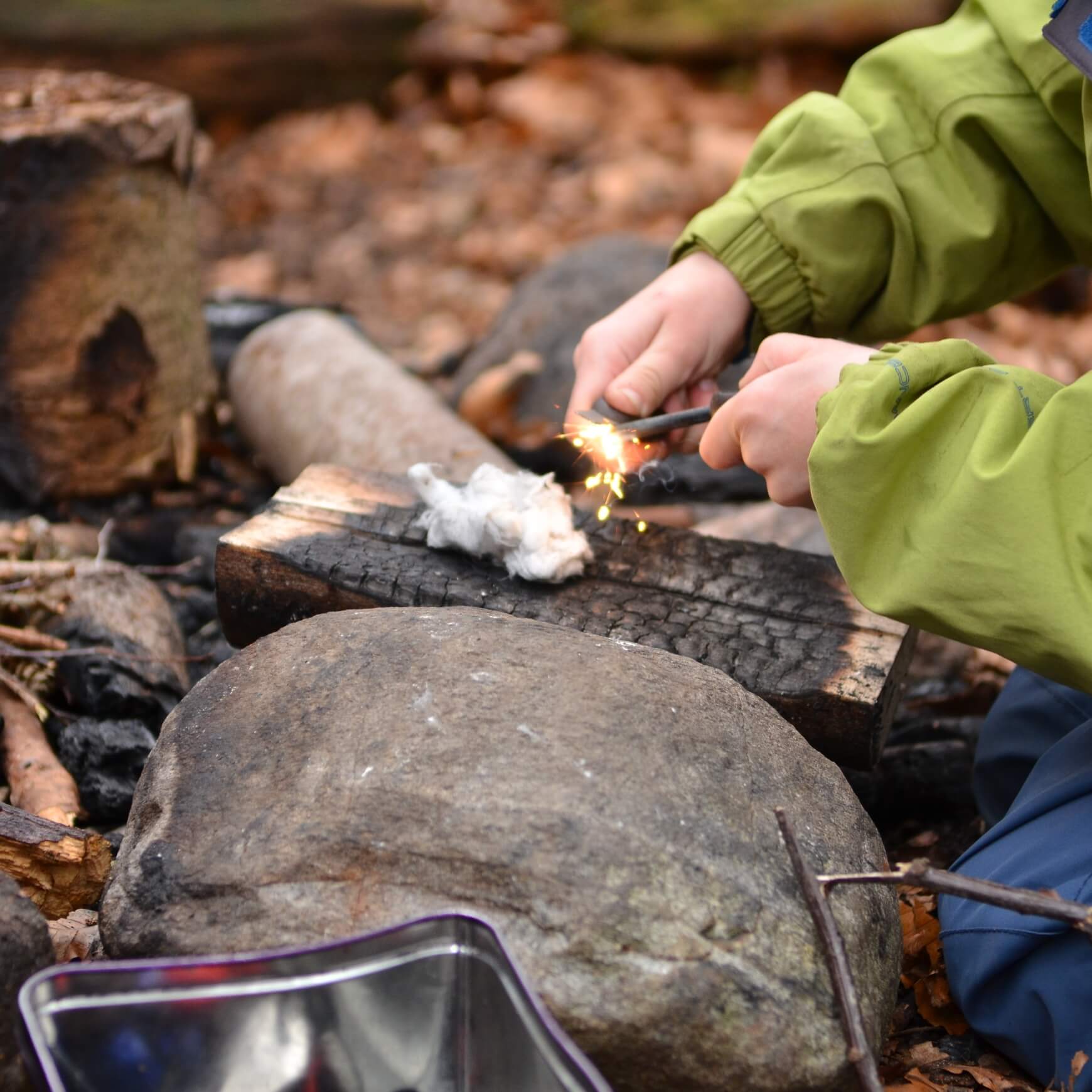
I’ve seen this play out countless times when children are learning to light fires with fire steels. Some create sparks within minutes. Others struggle across many sessions, with little visible success. So, what do we do?
Do we let them continue with an approach that isn’t working, risking frustration and humiliation becoming permanently associated with campfires? Or do we step in and take over?
There is a middle way.
By breaking the task down into smaller steps and scaffolding success, we can hold children in that productive space between comfort and overwhelm. “Let’s make a spark together.” I might model how to hold the steel, guide the angle, and share the moment when a spark finally appears. We celebrate — not just the effort, but the achievement. Over time, we repeat this together, gradually moving towards igniting cotton wool.
Whose spark lit it? Does it matter?
What matters is that confidence and competence are growing side by side. As the child’s skills strengthen, the scaffolding falls away. We problem-solve together: What could help? What might we change?
In practice, Growth Mindset seems to work best when paired with Lev Vygotsky’s Zone of Proximal Development — that sweet spot where challenge is real, but support is close at hand.
The Criticisms
Many educators credit Dweck’s work with helping education move beyond the “tyranny of IQ” — the idea that children are born with a fixed ceiling of potential. Growth Mindset reframes struggle as part of learning, valuing process over product and normalising not-yet knowing.
But the theory has also attracted sharp and important criticism.
Some argue that Growth Mindset has been weaponised, used to gloss over poverty, trauma and structural inequality — placing responsibility for “failure” squarely on children’s shoulders.
“Growth Mindset is the ‘new’ way of telling kids that if they fail, it’s their own fault for not trying hard enough.” — Alfie Kohn
Others point out that what looks like a lack of motivation may be a rational response to trauma, exclusion, or unmet needs.
To her credit, Carol Dweck addressed these misuses in a 2015 update, warning against “False Growth Mindset.” Praising effort alone — especially when learning hasn’t occurred — can feel like a consolation prize. Telling children “You can do anything if you try hard enough” ignores disability, neurodiversity, and neurological barriers that require thoughtful scaffolding, not more grit.
Perhaps most concerning is when mindset language becomes a tool of compliance — “You just don’t have a growth mindset” — used to silence valid frustration with poorly designed or under-resourced tasks.
The Middle Ground
After more than 17 years and hundreds of children who struggle with self-belief, I’ve come to see Growth Mindset not as a solution — but as one tool, to be used carefully and ethically.
Here’s what feels essential:
- Avoid the Rescuer Trap
Don’t do it for them (pity), but don’t reduce support to “try harder” either. - Acknowledge the Environment
A child cannot develop a Growth Mindset in a space that feels unsafe. For children with trauma, effort itself can feel risky. - Shift from “Mindset” to “Support”
Instead of asking “How do I change this child’s mindset?”, ask:
“How do I change this environment, so the child feels safe enough to take a risk?”
As one researcher powerfully puts it:
“Growth mindset without growth opportunity is just another way to blame the marginalised.” — Luke Wood
In Nature Nurture, we don’t ask children to be braver, tougher, or more resilient on their own. We shape environments, relationships and experiences so that growth becomes possible — naturally, gently, and together.
Learn More
Explore how relational pedagogy, outdoor learning and strengths‑based approaches can transform your setting:
👉 Nature Nurture Approach & Courses
👉 Training & Consultancy Support